

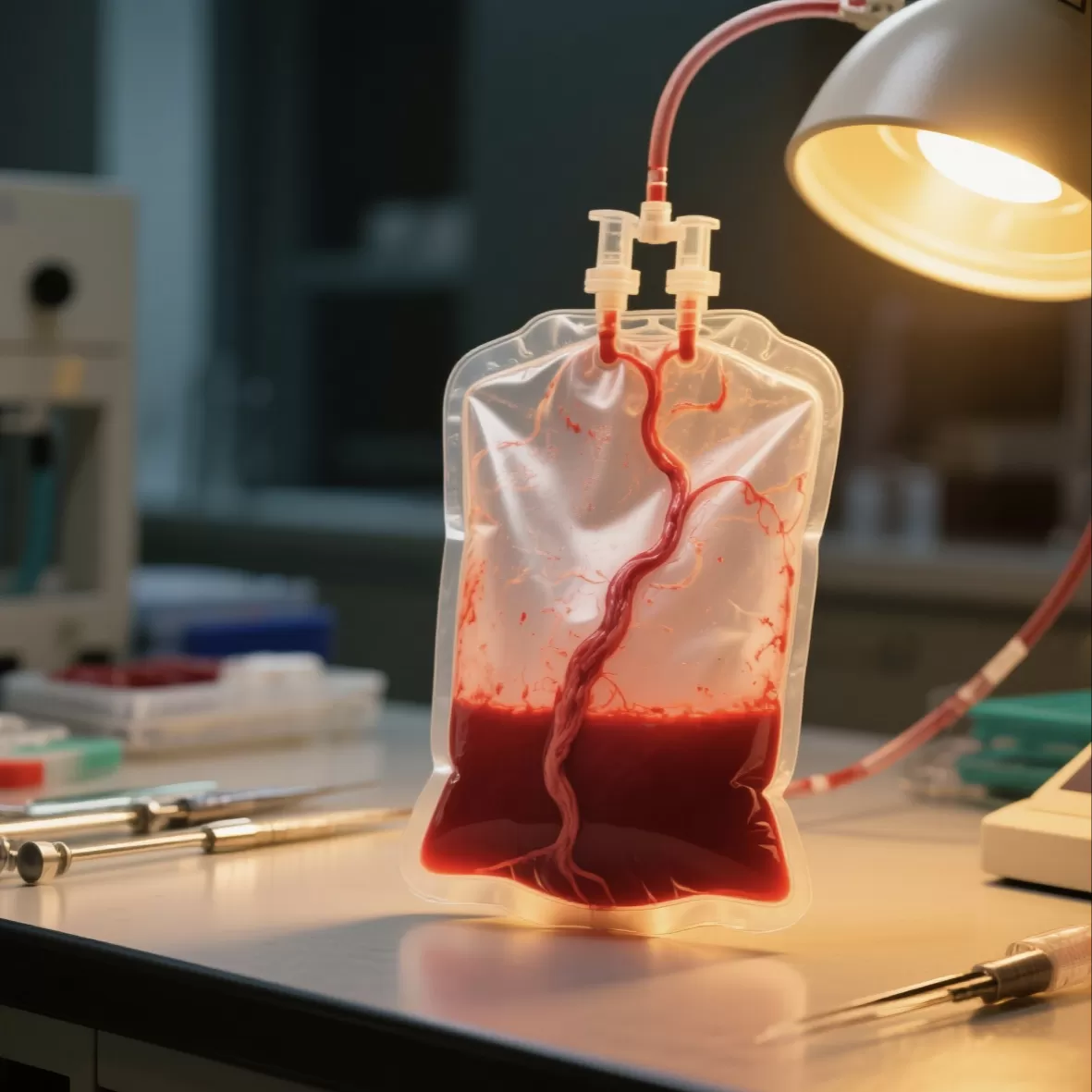
In October 1988, Dr. Eliane Gluckman from Hôpital Saint-Louis in Paris faced a desperate choice: 6-year-old Fanconi anemia patient Matthew needed a bone marrow transplant, but no matching donor could be found among the 4 million registered donors worldwide. When her gaze fell on the umbilical cord in the delivery room trash can, a groundbreaking idea emerged — these discarded cord blood might hold the code to saving a life.
This gamble created a medical miracle: 28 days after the transplant, the patient's neutrophils successfully engrafted. This case, hailed by The New England Journal of Medicine as "a turning point in modern transplant medicine," completely reshaped the landscape of humanity's battle against blood diseases. Meanwhile, halfway across the globe at Beijing Jingdu Children's Hospital, a group of doctors were quietly documenting this historic moment, unaware that three decades later, they would become the eastern standard-bearers of this revolution.
The unique biological advantages of cord blood make it a perfect carrier of life:
Immunological Tolerance: HLA matching requires only 4/6 loci compatibility (bone marrow transplantation requires 8/8), expanding donor options by 10 times
Youth Advantage: Telomere length is 40% longer than adult stem cells, with proliferation capacity increased by 5-7 times
Viral Firewall: Cytomegalovirus (CMV) carriage rate is only 1% (compared to 50% in bone marrow donors)
Time Capsule: Viability remains at 92% after 25 years of cryopreservation in liquid nitrogen (long-term study by New York Blood Center)
The breakthrough contributions of the Transplantation Center at Beijing Jingdu Children's Hospital include:
Microenvironment Reconstruction Technology: Medium supplemented with Notch ligand Delta1 achieves 238-fold expansion of CD34+ cells
Intelligent Cryopreservation Protocol: Programmable freezer precisely controls cooling at 0.5℃ per minute to avoid ice crystal damage
Transplantation Early Warning System: cfDNA detection for graft-versus-host disease (GVHD) provides diagnosis 14 days earlier than traditional methods
Indicator | European and American Protocols | Jingdu Protocol |
Cell Recovery Viability | 85%-88% | 94%-96% |
Neutrophil Engraftment Time | 21-28 days | 14-18 days |
Chronic GVHD Incidence | 32%-38% | 18%-23% |
Annual Storage Cost (per unit) | 1,800-2,500 | 800-1,200 |
Rare Disease Coverage | 68 types | 89 types |
Data from the 2023 World Cord Blood Congress shows that using the Jingdu double-unit cord blood transplantation protocol for leukemia treatment, the 5-year disease-free survival rate reaches 73%, an increase of 19% compared to single-unit transplantation. In treating genetic metabolic diseases like mucopolysaccharidosis, enzyme activity recovery reaches 82% of normal levels, breaking the 70% bottleneck of international similar technologies.
Copper chelator STEMREG® developed by Japan's JCR Pharmaceuticals increases CD34+ cell expansion efficiency by 15 times, reducing the minimum cell dose requirement from 2.5×10^5/kg to 0.8×10^5/kg
CRISPR-Cas9 technology precisely repairs β-thalassemia mutations in cord blood stem cells with 91% correction efficiency (Nature Medicine, 2023)
Deep learning models predict HLA epitopes, shortening the time to find suitable donors from 3 months to 72 hours
Injecting healthy donor mitochondria into cord blood stem cells increases survival rate in elderly patients by 42%
World Marrow Donor Association (WMDA) enables real-time sharing of 4.3 million cryopreserved cord blood units across 34 countries, with a 99.7% matching success rate
Universal Cord Blood: Gene editing eliminates HLA antigens to create "off-the-shelf" biological products (Phase I clinical trial by US-based Fate Therapeutics)
In Vivo Expansion: Nanorobots carrying growth factors are injected to directly activate cord blood stem cells in the patient's bone marrow
Organ Regeneration: Cord blood mesenchymal stem cells construct 3D-printed bio-kidneys, achieving 30% functional replacement in animal experiments
Anti-Aging Applications: Infusion of young cord blood exosomes extends lifespan of elderly mice by 23% (Cell, 2024)
Space Bank: Cryopreservation of cord blood in zero-gravity environment aboard the International Space Station reduces cell viability decay by 97%
Beijing Jingdu Children's Hospital is collaborating with SpaceX on the "Interstellar Cell" project: establishing the first space cord blood bank in low Earth orbit, utilizing cosmic radiation to enhance stem cell antioxidant capacity. Ground simulation experiments show that cells cryopreserved in space for 6 months have 3 times enhanced proliferation capacity.
In Nairobi, Kenya, mobile cord blood collection vehicles have increased rural donation rates by 8 times. Brazilian scientists developed palm wax as a cryoprotectant alternative to dimethyl sulfoxide, reducing costs by 90%. More inspiringly, in March 2024, Beijing Jingdu Children's Hospital completed the world's first "three-parent cord blood transplant": using mitochondrial replacement technology to simultaneously cure a patient's blood disease and genetic metabolic defects.
"Every cryopreservation tank is humanity's Noah's Ark against disease," commented Professor Hal Broxmeyer, the father of world cord blood transplantation, on the Chinese protocol. As the European Group for Blood and Marrow Transplantation incorporates the "Jingdu Standards" into guidelines, as The Lancet launches a global real-time tracking system for cord blood transplants, and as Africa's first AI-powered cord blood bank opens in Cape Town — this is an epic of life co-authored by all humanity.
In the Life Science Museum of Jingdu Children's Hospital, 3,174 glass vials shimmer in liquid nitrogen vapor — each preserving a gift from a new life. Here lies "Hope No.1" that cured a thalassemia patient, and "Courage No.73" donated for ALS research. This reverence for life earned the center the UNESCO Bioethics Prize.
"We are not storing cells, but humanity's most precious kindness," said the center's director at the 2024 International Transplantation Congress. As Japan legislates to include cord blood in universal healthcare, as the US FDA approves the first universal cord blood product, and as China's Tiangong Space Station conducts cellular experiments — this technological revolution born from a maternity ward trash can will ultimately become a guiding star for human civilization.

 EN
EN
 CN
CN