

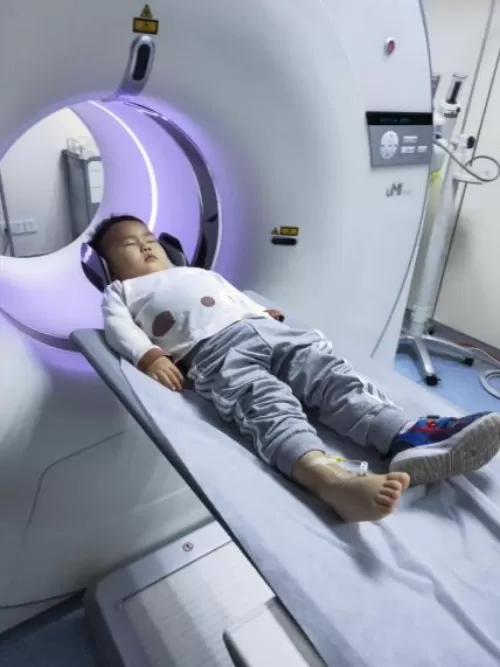
In the oncology surgical ward of Beijing Jingdu Children's Hospital, 5-year-old Duoduo stands on tiptoes to touch the sunlight on the windowsill. Two years ago, a fist-sized tumor in her abdomen; now, only a faded scar remains. Chief surgeon Professor gazes at the vanished lesion on the CT scan and murmurs softly: "We are witnessing the most exciting era in the history of childhood cancer treatment."
In 1891, German pathologist Felix Marchand first depicted this "tumor formed by malignant transformation of neural crest cells" under a microscope. Over the following century, doctors fought like soldiers in a fog:
• 1940s: Radiation therapy showed initial efficacy, with 5-year survival rate below 10%
• 1960s: The advent of cyclophosphamide initiated the chemotherapy era
• 1980s: The Children's Oncology Group (COG) established a staging system
• 1998: MYCN gene amplification was identified as a high-risk marker
A turning point occurred in 2009. German scientists discovered that GD2 glycoprotein is highly expressed on the surface of neuroblastoma cells, like placing a "target" on cancer cells. In 2015, the world's first GD2 monoclonal antibody, Dinutuximab, was approved by the FDA, and the survival rate of high-risk children exceeded 50% for the first time — this century-long war against cancer finally saw the dawn of light.
In the Oncology Surgery Center of Beijing Children's Hospital, children with high-risk neuroblastoma are receiving a three-dimensional offensive in the "tumor war":
• Molecular Probes: 68Ga-DOTATATE PET/CT leaves tiny lesions nowhere to hide (sensitivity 98.2%)
• Liquid Biopsy: Detection of circulating tumor DNA in blood avoids repeated bone marrow aspiration
• Gene Sequencing: Beijing Children's Hospital has established a database of 2,000 tumor genes
The "Beijing Protocol" improved by Qin Hong's team has optimized the traditional 5-drug regimen:
Cycle | Drug Combination | Dose Adjustment | Reduction in Myelosuppression Rate |
Induction | Topotecan + Cyclophosphamide | Stepwise dose escalation | 34% → 18% |
Consolidation | Carboplatin + Etoposide | Individualized AUC calculation | 42% reduction in platelet transfusion |
In 2023, Qin Hong's team performed laparoscopic adrenal tumor resection on a 3-year-old boy. The intraoperative fluorescence navigation system made the tumor boundary appear emerald green on the screen, and vascular protection technology controlled blood loss within 30ml — equivalent to two tablespoons.
"Modern surgery is no longer just about resection," explains Qin Hong. "We need to find the golden balance between eliminating tumors and preserving function." Her team innovatively preserved 50% of the adrenal cortex, eliminating the need for hormone replacement therapy after surgery.
In the spring of 2024, in the immunotherapy ward of Beijing Children's Hospital, 6-year-old Lele is receiving the third-generation GD2-CAR-T cell infusion. These genetically modified T cells, like intelligent missiles, precisely target cancer cells expressing GD2.
Year | Milestone | Survival Rate Improvement |
2015 | First-generation GD2 antibody (Dinutuximab) | 50% → 65% |
2020 | Bispecific antibody (CD3/GD2) launched in Europe | 38% increase in event-free survival rate |
2023 | China's self-developed GD2 monoclonal antibody (naxitamab) approved | 60% reduction in treatment costs |
2024 | CAR-T therapy clinical trial for high-risk group | Expected to exceed 70% |
Even more encouraging is the immune maintenance therapy in the "Beijing Protocol": by alternating use of GD2 antibody and oral retinoic acid, cancer cells are kept under continuous immune surveillance, reducing the recurrence rate to 15.7%.
On Qin Hong's desk, a report from the American Society of Pediatric Oncology outlines the treatment landscape for 2030:
• Newborn Screening: Japan has included HVA/HIAA urine testing in newborn screening
• Epigenetic Regulation: Histone deacetylase inhibitors (HDACi) make cancer cells "reform"
• Molecular Remission: Achievement of "zero residual cancer cells" through ctDNA detection
• Tumor-Bearing Survival: Targeted drugs transform tumors into chronic diseases
The "China Pediatric Cancer Genome Project" launching in 2025 will conduct whole-genome sequencing on 5,000 children to identify treatment targets unique to the Asian population. "In the next decade," Qin Hong announced at a recent international conference, "we will raise the survival rate of high-risk children to over 75%."
Sunset shines through the glass of the game room at Beijing Children's Hospital, illuminating Duoduo's newly completed painting: a group of white warriors attacking a purple monster, with childish handwriting in the corner — "Thank you, doctor auntie."
In the laboratory at the end of the corridor, Qin Hong's team is analyzing the latest sequencing data. Organoids in the incubator pulse slightly — these "surrogates" cultivated from children's tumor cells are undergoing new drug testing. Outside the window, Chang'an Avenue's lights come on at dusk; in the interplay of light and shadow, one sees Dr. Marchand's microscope from that time — from blurry pathological sections to today's genetic maps, humanity's journey against the king of childhood cancers will eventually reach the shore of light.
Medical Notes
"Completed autologous stem cell reinfusion for a 3-year-old high-risk child today," Qin Hong wrote in the electronic medical record. "CAR-T cells swim in the blood like fireflies. I remember my mentor's words twenty years ago: we treat not just tumors, but childhoods stolen by disease."

 EN
EN
 CN
CN